


All about the budget and prices of a trip to Chile!
We have designed this article to explain how to estimate the price of your trip to Chile and calculate the budget for your trip to Chile in 2024.
This article is part of our series How to organize your trip to Chile that we invite you to read if you are considering a trip to Chile, whether with our agency, or on your own.
In this article, find all the necessary and up-to-date information in 2025 to plan your travel budget to Patagonia, Easter Island or the Atacama Desert, the must-see destinations in Chile.
We approach in a completely transparent way:
- The price of Paris-Santiago plane tickets and the cost of transport in Chile
- The estimated budget of a trip to Chile organized by your own means… or through our services !
- An order of magnitude of the price of a tailor-made trip to Chile, without filter
So, you are you ready? Let’s get started!
The price of flights to Santiago and local transportation
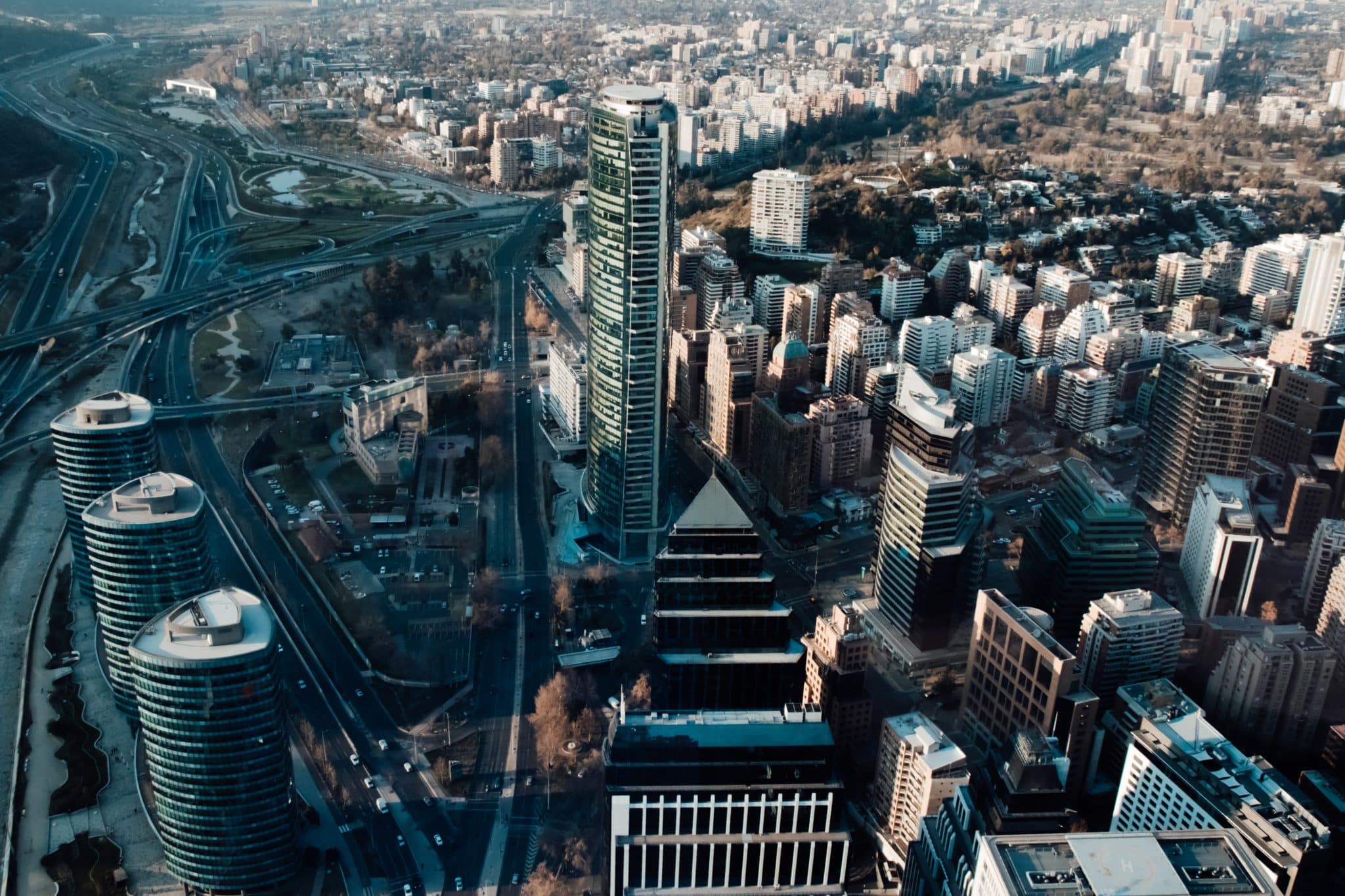
Miami to Santiago: the obligatory international flight
First step in preparing your travel budget in Chile: the unavoidable international plane ticket. To reach Santiago de Chile, you can find direct flights from several major airports in the US: Miami, Los Angeles (LAX), New York (JFK), Dallas-Fort Worth, Atlanta, and Houston. In Canada, non-stop flights depart from Toronto. A non-stop flight from Miami to Santiago clocks in at 8 hours, while the flight time from Toronto to Santiago is 10 hours and 20 minutes.
Be careful when buying since Santiago de Chile is not the only city in the world named Santiago! Don’t make the mistake of choosing Santiago de Compostela in Spain, or Santiago in Cuba! The international airport has a complicated name–Arturo Merino Benitez–but when searching for flights is also known by the initials SCL.
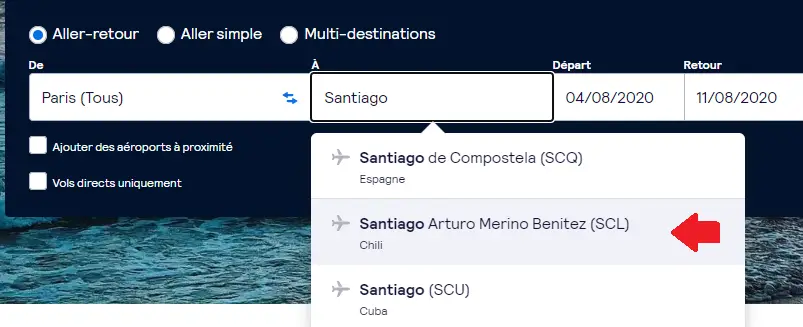
Regarding the price of this flight to Chile from the US, it costs from 950 USD to more than 1500 USD for a round trip. If you’re willing to allow for a layover, you have an even better chance of finding a bargain. Crossing through the USD is also an ideal option for Canadians or Europeans (just don’t forget to do you ESTA).
United, American Airlines, LATAM, and Delta all have direct flights to Chile. A round trip from Houston to Santiago costs on average from 700 US to US 1100.
For a flight to Chile from Canada with AirCanada: the cheapest round trip costs around $900 CAD and the most expensive about 1800 CAD roundtrip.
Domestic flights
Now that you have your international flight, you will arrive in Santiago de Chile. However, many of you choose Chile for its Patagonian glaciers or the famous Atacama Desert. In Chile, the distances are immense and you will have to go through Santiago heading north or south, or to Easter Island.
To cross these long distances, the most common way is to take internal flights between Santiago and the destination. No need to worry, the local airlines in Chile and regional airlines are all of good quality and secure. You will findlow cost options, which essentially practice the same kind of pricing policy as companies like Spirit and Frontier.
The most popular airlines are the Latin American giant LATAM (formerly LAN and TAM), and the more economical SkyAirlines and Jetsmart. Personally, I always prefer to travel with LATAM, which has more regular flight options and covers a large part of the country and region. Their customer service was also effective, even in the midst of the Coronavirus pandemic!
- For a one-way flight from Santiago to Calama (gateway to the Atacama Desert) you can expect to pay an average of 120 USD per person. Prices vary according to the dates (prices go up during public holidays and weekends) with very regular flights.
- To reach Patagonia, a one-way flight from Santiago to Punta Arenas in the summer season can quite easily costs 115 to 150 USD per person. Flights to the south are seasonal and you can expect large variations in prices, especially during the Chilean school holidays in February, for example. Flights around New Year’s are often exorbitantly priced.
Puerto Natales and Chiloé are also served but offer fewer weekly flights.
- Average price Santiago – Puerto Natales by plane: €180 per person (1 per day in high season)
- Average price Santiago – Castro by plane: 85 € per person (only 1 per week – in season)
You will also find flights less frequented but still useful for travelers who like to stray from tourist hot spots, such as Temuco, capital of Araucania; Copiapo in the North; or Arica or Iquique in the far North of Chile. To reach the Southern Highway or the lakes region, the small airports of Balmaceda and Puerto Montt are also very useful.
And many other destinations off the beaten track, but for that, it is better to refer to one of our travel creators, who will be able to advise you best according to your expectations.
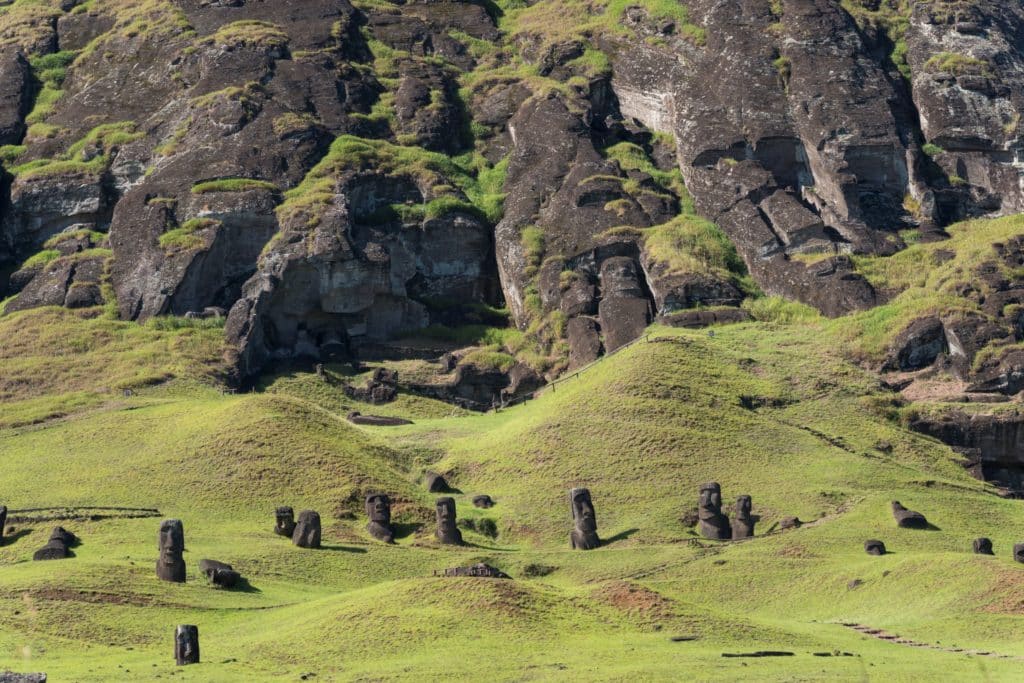
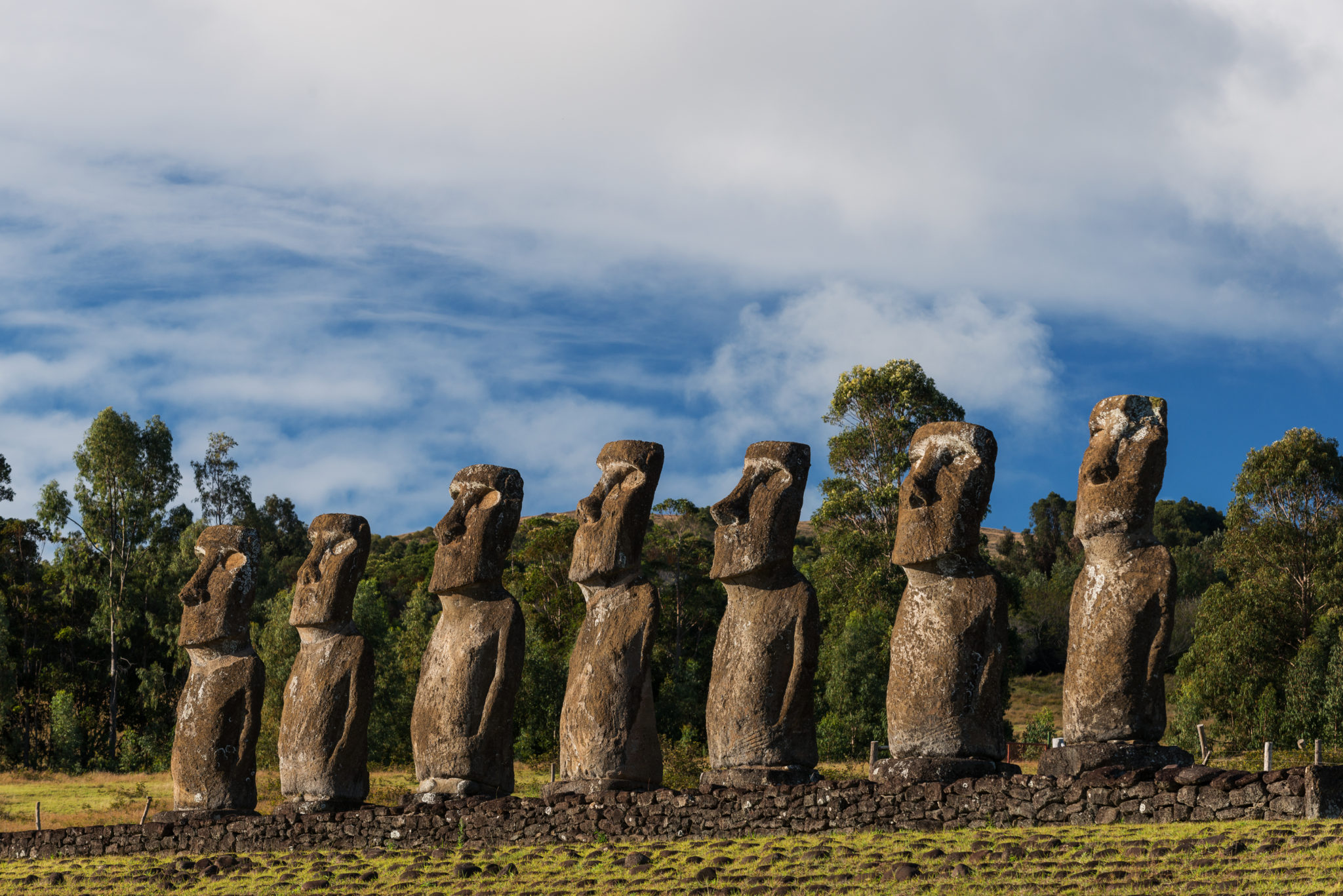
One small exception to this is Easter Island, located in the middle of the Pacific. The Chilean island is particularly known for being the most remote island separated from its continent in the world: it will take you about 5 hours to reach it by plane, to travel the 2,330 miles that separate it from the capital. The island is one of a kind, and therefore this flight is considered an international flight.
Upon arrival on site you will have to do specific administrative procedures and be provided with an invitation card from a local. This formality can very well be carried out by a friend from the island, or simply by your hotel. It is therefore imperative to have a reservation before arrival and that this accommodation is registered with SERNATUR!
This flight is long, so it is logically a fairly expensive flight for the region. Count on average 350 to 500 USD for a one-way trip to Hanga Roa, the capital, from Santiago. If you see a flight for 200 USD, go ahead and buy it right away because it’s a floor price.
LATAM operates at least two scheduled flights a day to reach the destination.
Our team's recommendation
You should know that it is possible to buy your tickets to Easter Island from abroad and sometimes it is cheaper than from Chile.
El Calafate in Argentina is another exception to the rule. The following might therefore interest you if you plan to do a combined Chile-Argentina trip to explore Patagonia.
To land at the gateway to the Perito Moreno glacier, the most famous in Argentine Patagonia, the prices are quite high. Count on average from 100 to 200 USD for a one-way ticket. Most flights depart from Buenos Aires.
To combine Chile and Argentine Patagonia into one trip, I often recommend arriving in Santiago, making your way to Punta Arenas on the Chilean side, then crossing the border and leaving from El Calafate to Buenos Aires, and from there returning home. There is no direct flight to El Calafate in Argentina from Santiago, Chile.
Chile's train network
Although Chile could be considered the ideal geography for a railway (long and narrow), the country does not have a well-developed railway network. The few railways that exist are now tourist or mining (in the North), largely unused. However, if you absolutely want to take thev train during your stay, we recommend that you take the route from Santiago to Linares to reach the Maule region, and in particular the Eco Refugio, one of our favorites.
The bus network of Chile and Argentina
While the train network leaves much to be desired, there is nevertheless a well-developed network of day and night buses.
In my opinion, this is THE economical and ecological solution for all those who have a little time to live in Chile. To reach the north, south or even Argentina, it is a great alternative to local planes. To visit closer places, such as Valparaíso, it is also a great solution, as well as budget-friendly.
Night buses are a fairly common way to travel here, and depending on the category chosen, you could quite comfortable options.
Here is an example of the price of a night bus connecting Santiago to Temuco (from 8 to 9 hours of travel):
- Price of a half-berth seat (semi cama): 24,000 CLP or 24 USD.
- Price of a sleeper seat (salón cama) 32,0000 -50,000 Chilean pesos or about 30 to 55 USD.
- Premium seat price: 55,000 CLP to 75,000 CLP, or 50 – 75 USD.
There are many bus companies, with more or less recent fleets. We have not tested them all, but I can assure you that TurBus or Pullman Bus are reliable, and the most common bus lines.
A word of advice: there are so-called pirate buses. These are old, outdated buses to make cheaper trips… but they are not up to regulation. The more adventurous can use them to reach Valparaiso from Santiago if all the other buses are full. But, be prepared to wait for the bus to fill up, make impromptu stops, and vary greatly in price if demand is high. This is the kind of small inconvenience that can be easily be avoidedby going through a local travel agency in Chile, And we explain why in our dedicated blog post.
Explore Chile by car: car rental and road trips
I will now tell you about one of my favorite ways to visit Chile: the roadtrip! It is an alternative that I recommend to both young adventurers and families with children, but also more experienced travelers!
Chile, like Argentina, has good highway infrastructure. There are many highways and the lanes are generally very well maintained. And, for those who may be wondering, yes, we drive on the right side of the road down here! You will be able to keep your driving habits during your self-guided tour.
This is a very convenient and pleasant way to discover Chile, especially when you have a few weeks to spare. And, if you are still debating about the duration of your trip, go ahead and read our article “How many days does it take to visit Chile?”
In addition, in some cases, driving can also be a cheaper option. But for that you need to know the secrets of car and van rentals in Chile!
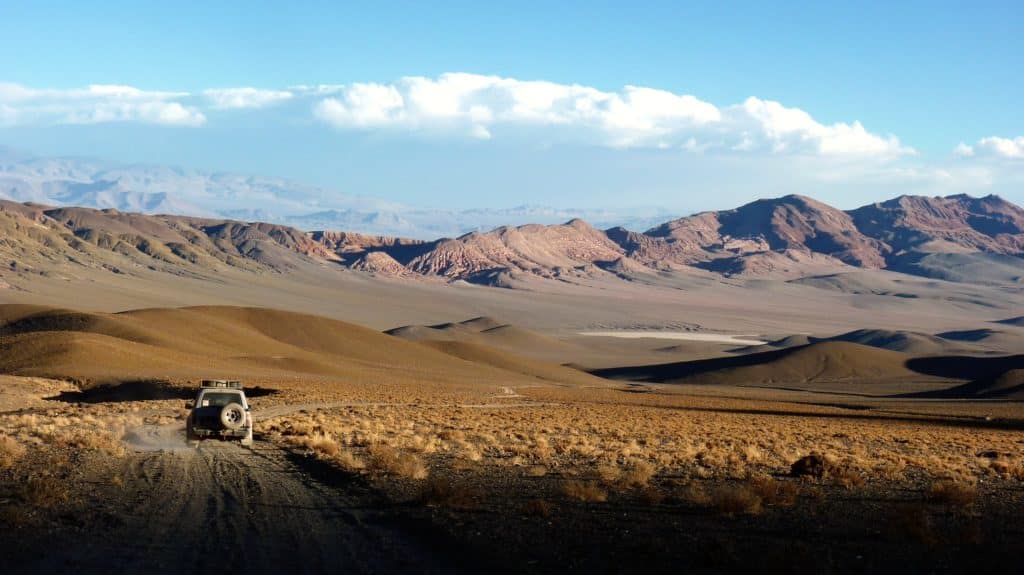
Here are our 9 secrets to rent your car in Chile:
- Avoid car rental at the airport, as they are more expensive than the ones in the city.
- Avoid picking up your car in one location and dropping it off in another, i.e. renting your car in Punta Arenas and leaving it in Chiloé. The prices are quickly exorbitant (i.e. + 1000 USD)!
- Avoid driving in Santiago. The capital is full of tolls and you will have to rent a TAG, the city’s toll device.
- Forget about the self-driving tour in the desert of Uyuni. With the altitude and sandy roads, you will take unnecessary risks both for your health and getting lost or stuck in the desert.
- In Patagonia, close the doors of your van securely so as not to damage them with gusts of wind. Also plan to watch a Youtube tutorial to learn how to change a wheel, you may need it.
- Plan your stops on Maps.me, sometimes with coordinates, in Patagonia. It’s the end of the world so the road signs and the phone network are sporadic or non-existent!
- On the Southern Highway (Carretera Austral), plan your gas stops before leaving. There are not many gas stations and running out of gas is never enjoyable!
- Do not cross the Chile-Argentina border without an Argentine permit (a mandatory document that insures the Chilean vehicle when passing through Argentina) and without accounting for several hours of waiting time. Inspections of the vehicle, the rental, and your license are a must.
- Choose the vehicular model adapted to your destination: some national parks are only passable with 4x4s or pickups.
Back to the rental car budget (after all that is the topic of this article), here is an average of the rates by model and per day:
- City or compact car: 40,000 about 40 USD per day
- Category C: approx. USD 55 (55,000 CLP) per day
- Category D (4×2): USD 65 (65,000 CLP) per day
- Jeep and 4×4: about 85 USD (85,000 pesos) per day
- 7-person van: on average USD 110 (110,000 pesos) per day
- Van, motorhome and camper: about 150 USD per day (very variable depending on the specific model)
Cruise, ferry, and boats of all kinds
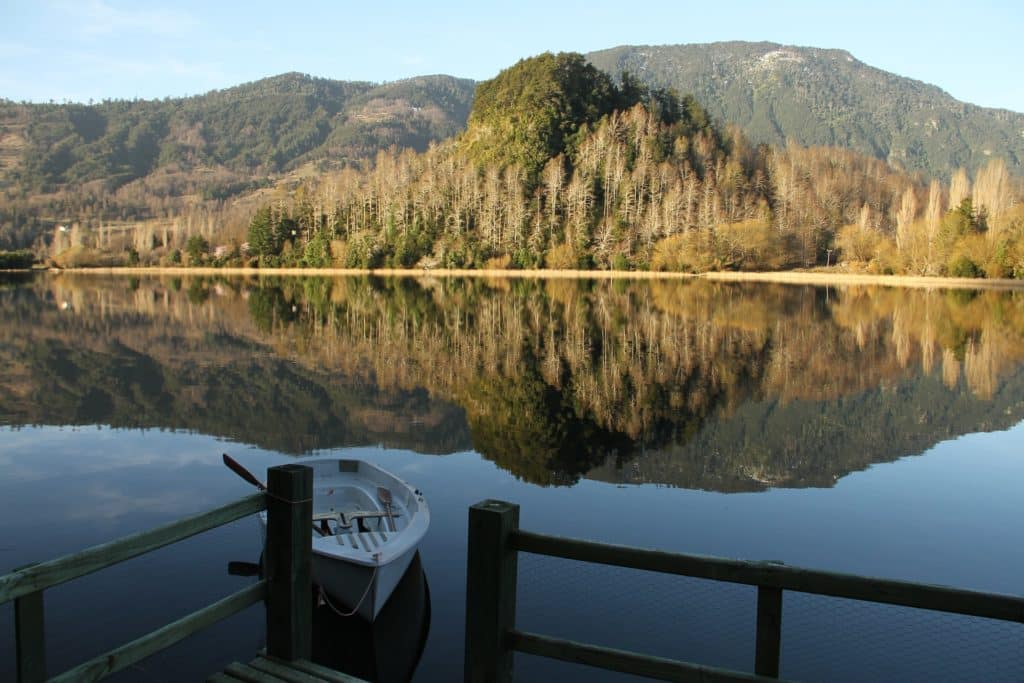
But, you ask, with its huge Pacific coast, its fjords, rivers, and lakes, what about marine transport in Chile? There are a large number of diverse cruises, ferries and boats in Chile. Sailing is a great way to explore incredible scenery and get up close and personal with remote glaciers.
Whether for touristic purposes or as a necessary form of transportation to connect isolated places, there are all kinds of boats.
Here is a small sampling with average prices in Chile:
-
- Ferry from Chile Chico to Puerto Ibañez (2 hours) to cross the General Carrera lake: 5 euros for a seat, small vehicle 25 USD.
- Fishing boat tour: approx. 10 euros per person
- Cruise to Glacier Grey (4 hours): $130 USD per adult.
- Navimag Crossing from Puerto Montt to Puerto Natales (4 days 3 nights): from $480 USD per person in a 6 dormitory
- Australis cruise from Punta Arenas to Ushuaia (4 nights all inclusive): from $1590 USD per person (low season and in cabin B).
Our team's favorite experience
"After 8 years of living in Chile, I finally took the time to experience the Navimag Ferry. 4 days between the Patagonian fjords on a cargo ferry, literally cut off from the world. An extraordinary experience, which I recommend to all travelers looking for an off-the-beaten-track experience. I talked about it so much that Anne went there too, in the middle of winter!"
This should give you a good idea of the different modes of transport possible in Chile, and their prices! But don’t forget about walking and hiking in Chile! It’s free, it’s active, it’s environmentally friendly, and it’s the national sport of Chile (after “futbol,” of course)!
The true cost of living in Chile
Let us now turn to the price of living in Chile. Everyday life or the costs of tourist activities, find here the budget to plan for on site in Chile in 2025.
For anyone looking to budget for their trips, whether in Latin America or elsewhere, we recommend checking out Advised Traveler. Their travel budget estimator is an interesting tool, which helps you quickly get a first idea of the budget according to your desires and your travel style, regardless of the country you want to visit. Also check out their traveler’s toolkit with lots of handy resources to prepare for your trips.
Prices hotels and lodging in Chile
There is really no average price for lodging in Chile. As anywhere else, it all depends on the level of comfort and luxury, the tourist season, and the destination!
But to give you a more concrete idea to better prepare your trip to Chile, here is our guide to the average prices of Chilean hotels:
Non-touristic places:
- Camping: Free at $15 per night per tent.
- Bed in dormitory: from 15 euros to 35 dollars per night.
- Clean, single double room: $65 to $85 per night.
- Standard double room: $90 to $150 per night.
- Charming double room: 160-250 dollars per night.
Tourist cities (Puerto Natales or San Pedro de Atacama):
- Camping: $15 to $20 per night per tent.
- Bed in dormitory: from 25 to 35 dollars per night per person.
- Single and clean double room: $75 to $95 per night.
- Standard double room: $110-180 per night.
- Charming double room: 200-300 dollars per night.
Popular sites (Torres del Paine or Easter Island for example):
- Camping: from $12 to $30 USD per night per tent.
- Refuge: $20 to $100 USD per night per person.
- Basic double room: $160 per night.
- Standard double room: $200 per night.
- Charming double room: 250-400 dollars per night.
Hot tip! It is important to remember to keep the small “receipt” that is given to you at customs (PDI). This is your visa. Foreigners who are in Chile as tourists and who pay in dollars (USD) in authorized hotels do not pay the VAT (value-added tax) of 19%! This is the most practical way to easily save money on your nights in a hotel.
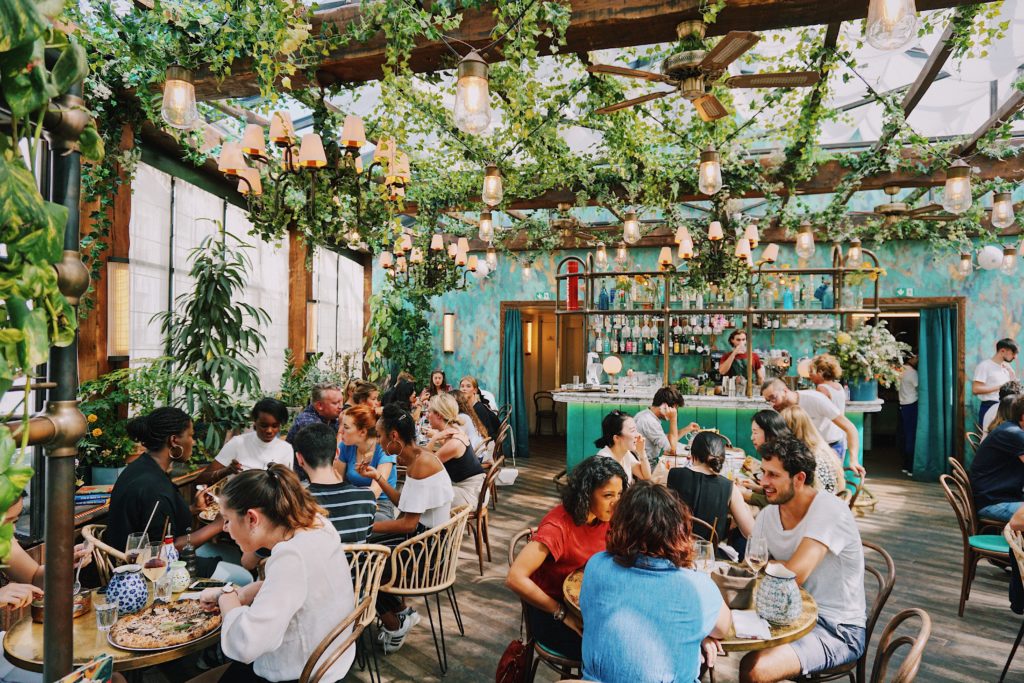
Prices of meals in restaurants
As with hotels, the price of a restaurant during your stay in Chile will depend on the location and range.
- On the go
Specific to Latin culture, throughout the country you will find “picadas,” street food, and lots of cheap and popular snacks. Chile’s famous offering: the empanada. You will find them in Chile fried or baked and filled with meat or seafood. It can be found almost everywhere and it’s a meal in itself! For 2,000 to 3,500 Chilean pesos (about 2 to 3.5 USD) you will have a meal on the go, ideal for small budgets.
Another typical snack: sopaipillas. This pumpkin fritter is eaten salty, with pebre (Chile’s version of pico de gallo), or sweet in winter with panela, a type of cane sugar. A sopaipilla costs about 500 CLP (less than $1 USD) and is more commonly found in the street than in a restaurant. In Santiago, you have to eat several to fill your stomach, but in the south a homemade sopaipilla can be the size of your head!
Interested in these recipes? You can find in another blog post our 5 favorite Chilean recipes that are easy to make at home !

- Price of a breakfast
A typical Chilean breakfast–scrambled eggs with bread or avocado toast and a coffee–costs about 5,000 to 8,000 pesos ($6 to $10 USD).
- Price of a lunch
For a local lunch in a traditional restaurant, plan to spend about 10,000 pesos ($12.50 USD). In a trendy restaurant that price is more like 15,000 pesos ($18.50 USD). And in a more luxurious, starred restaurant, prices vary enormously and can skyrocket.
- Price of a dinner
A traditional dinner will cost you around 18,000 pesos in an authentic restaurant. In a more fashionable restaurant or with foreign food, count 22,000 pesos. For dinner in a gourmet restaurant, prices quickly rise above 35,000 Chilean pesos ($43 USD).
In Torres del Paine or in large hotels, you can expect to add 20% on top of that! Do not forget that in Chile has an “optional” tip on the bill of 10% (but that amount is almost always expected unless you had a terrible experience).
Price of an average trip to the grocery store
For those who prefer to save money and start cooking, it is necessary to read the next section carefully. As you will see during your holiday at Chili, the prices of the stalls are not too different from European prices (about 20% cheaper).
The supermarket chain with the lowest prices is Lider (owned by the Walmart corporation). For a wider selection–but higher prices–head instead to a Jumbo. The mini market and other small local shops should be used only for quick trips to replace necessities because they have higher prices and they are not well supplied.
Farmers’ markets (ferias) are generally cheaper, especially if you buy in quantity.
Here are some of the costs of basic products, to give you an idea of local prices:
- Lettuce: 1 USD
- 1 kg of bananas: 2 USD
- Dozen eggs: 4 USD
- 1 kg of rice: 2 USD
- 1 kg of bread: 2,1 USD
- 1 liter of milk: 1.5 USD
Bars and cafes
In bars and cafes, prices vary a lot depending on the rather affluent or touristy neighborhoods of Chile.
Generally speaking, a pint (half a beer) costs 4.50 USD.
Unlike in the U.S., here craft beers are often cheaper than the big imported brands, and they are delicious! A bottle of foreign beer costs on average $3.70 USD per 12 oz.
In Chile, there is no tax on local wines, which makes the price of a glass or bottle of wine much cheaper! An average bottle of wine will cost you around 15,000 pesos. A glass (which is also much more generous than in the US), is worth an average of $6 USD.
A cappuccino will cost you about 2,500 pesos and a coca-cola 1500 pesos!
Tourist activities and excursions
In the field of tourist activities, there is no rule that applies everywhere. The majority of Chile’s national centres have paid admissions.
Here is a non-exhaustive list of the cost of entry to some of the most famous natural parks:
-
Torres de Paine National Park: 31,000 CLP (or 40 USD) per adult, 16,000 CLP (or 20 USD) per child (valid for several days)
-
Valley of the Moon: 10,800 CLP per person (11 euros)
-
Arcoíris Valley: 6,000 CLP per person (6 euros)
-
Altiplanic lagoons and red stones: 25,000 CLP per person (26 euros)
-
Geysers del Tatio: 15,000 CLP per person (16 euros)
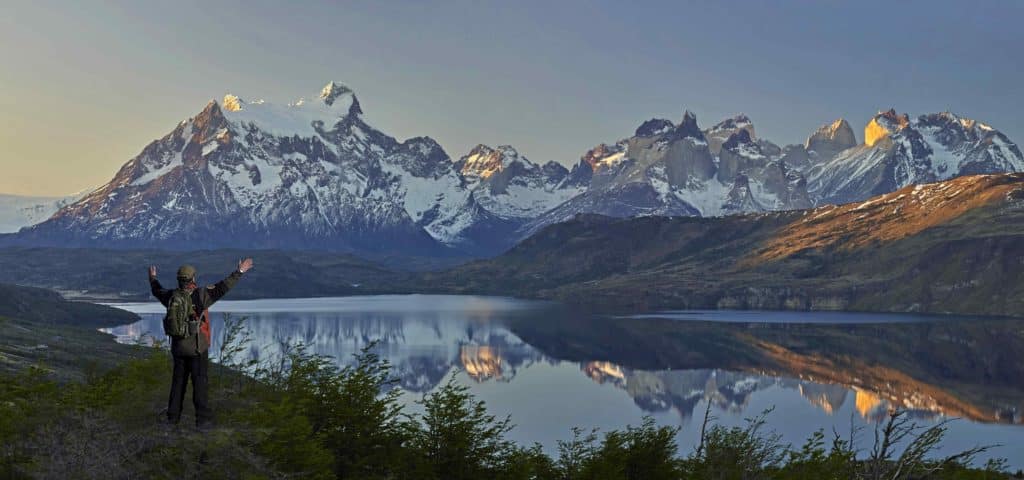
For organized excursions, prices vary from one to three times depending on your needs. The cheapest option will always be a group tour with a Spanish-speaking guide. Prices will increase with an English-speaking guide. The smaller the number of participants, the more expensive the activity will be. A tour with a private English-speaking guide in their car will therefore be the least economical option, but surely the highest quality and most informative. It’s up to you to choose what suits you!
Our team's recommendation
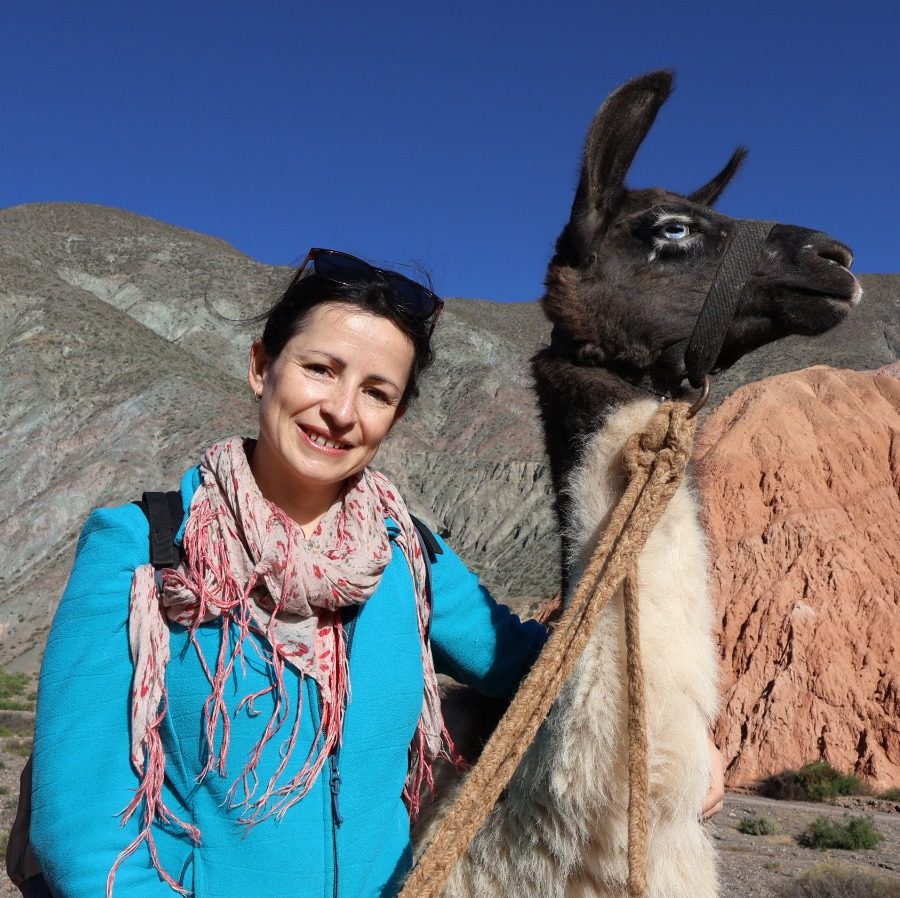
"I prefer to advise my travelers to take a private English-speaking guide on the Atacama Desert than in Patagonia. Indeed, the south of the country in general lends itself well to car rental because the roads are generally in good condition and driving is safe."
Now you know more about the cost and budget to plan for your trip to Chile. But to really organize your money according to the trip you are preparing: let’s move on to specific low-budget and tailor-made travel focuses with a local travel agency and without intermediaries.
Chile on the cheap
Attention all adventurers, backpackers, and any globetrotters or those planning a tour of South America: we will now talk about your project!
In our experience, the longest trips to Chile are often one leg of a larger world tour or a big trip throughout Latin America. Some celebrate their honeymoon, others their graduation or a well-deserved gap year.
Inevitably, this kind of trip is special Your overall budget is fixed and it’s challenging dividing that amount up properly by country. Or, want to do as many activities as possible without breaking the bank.
So, how can you achieve this trip? I’ll give you my advice in the rest of this blog post.
Here are my tips for a great trip lasting 3, 4, or 5 weeks in Chile on a tight budget:
- Take night buses instead of planes. This is the more economical and comfortable option.
- As a couple, opt for double rooms in hostels. The prices are often more appealing than in hotels.
- Travel slow. Discover must-see sights and destinations at a slower pace, for example on foot or by bike. You’ll avoid tourists, access hidden sites, and do treat your wallet gently. My favorite excursion: the Ojos del Salar by bike!
- Opt for discovering Patagonia by van. You will avoid overpriced hotels and wake up next to the glaciers… what could be better? If you want access to a map of all free camping and parking sites in Chile at no cost, contact us below!
- Cook yourself! It may seem obvious, but your food budget will be cut in half if you choose accommodation or van with a kitchen. You can indulge more than you might be able to in upscale restaurants!
- Forget about taxis! Download the Metro de Santiago app and you will be ready to explore the city by metro and bus. Public transport in the capital is well developed and safe (just watch out for pickpockets).
- Stray off the beaten path. The most touristic destinations are often the most expensive, so why not go to the far north or the Elqui Valley?
- Do not take the altitude lightly. In northern Chile, the elevation rises rapidly. The secret to a successful trip? Good acclimatization to altitude. So take your time traveling and gradually climb in elevation from site to site.
- Spend half a day with a guide on Easter Island. Even though being accompanied throughout your exploration remains ideal, with a short guided tour you will already learn the essentials of the history and culture of the Polynesian island.
- If a tour is necessary, opt for group excursions in Spanish. The price will be cheaper and you will be able to brush up on the local language.
- Have you thought about combining your trip in Chile with Uyuni (in Bolivia)? Depart from San Pedro in adventure mode with a tour. Economical and complete, it is the most whirlwind tour there is. You are sure to meet other likeminded travelers in your 4×4!
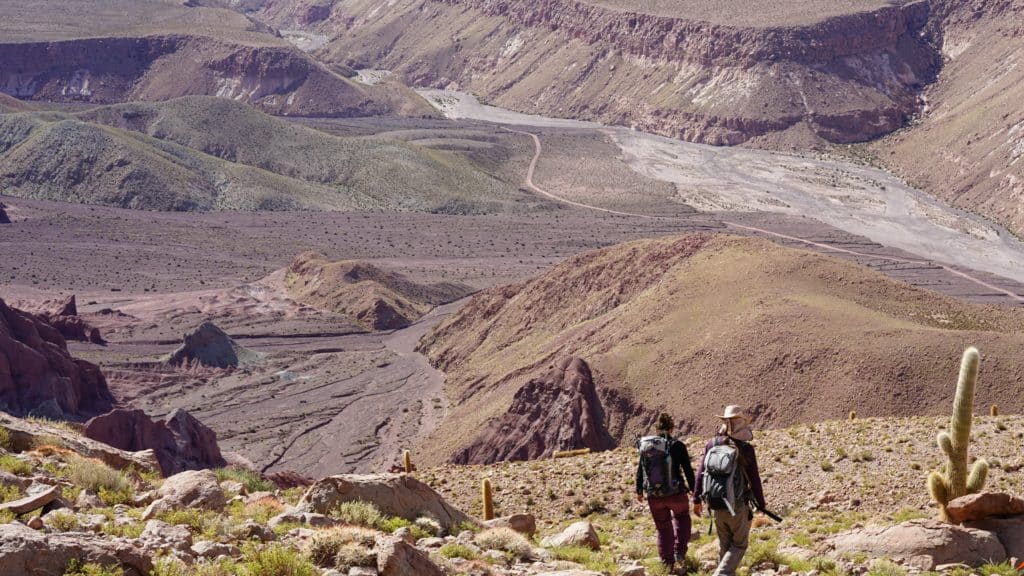
With our agency, on average, our frequent travelers spend 3 weeks in Chile, Their average budget is 4,500 euros per person.
For 2 weeks in Chile, the average price of the trip does not differ much (often because travelers want to see as much but in less time), as it is around 3,000 to 4000 euros per person.
At Travel Coach Chile, we help share the pricing of each service seamlessly with our travelers. This allows them to keep their hands on the budget while enjoying a tailor-made itinerary filled with unusual experiences and a stay that includes the most beautiful places outside the crowds, and in an authentic way.
For an average of 13 days in the Atacama Desert, we offer a safe itinerary full of authentic experiences for about 220 USD per day per person (based on 2 people).
An organized trip to Chile
Now let’s move on to seasoned travelers who prefer to enlist help in organizing their trip to Chile and enjoy high-quality experiences.
To get an idea of the budget of a trip to Chile, I will provide you with some examples.
- The average budget for a comfortable 3-week trip to the north and south of Chile: 250 USD per day per person based on 2 people.
- For a comfort trip to Easter Island, the travel budget is 300 USD per person per day on average (based on 2 people).
- The average budget for an all-inclusive trip to Patagonia, Chile and Argentina is 230 euros per day per person (based on 2 people).
- Luxurious getaways that venture to Tierra del Fuego and Ushuaia cost around 280 USD per day per person (based on two people).
But at TravelCoachChile, no two quotes are the same! Each of our tour plans costs the price the traveler has chosen. Then, we let’s create together the trip of your dreams to Chile, according to the budget and desires, the ideal discoveries. Our itineraries include domestic flights, accommodations, transportation, guides, and activities. In short, it’s an almost all-inclusive formula.

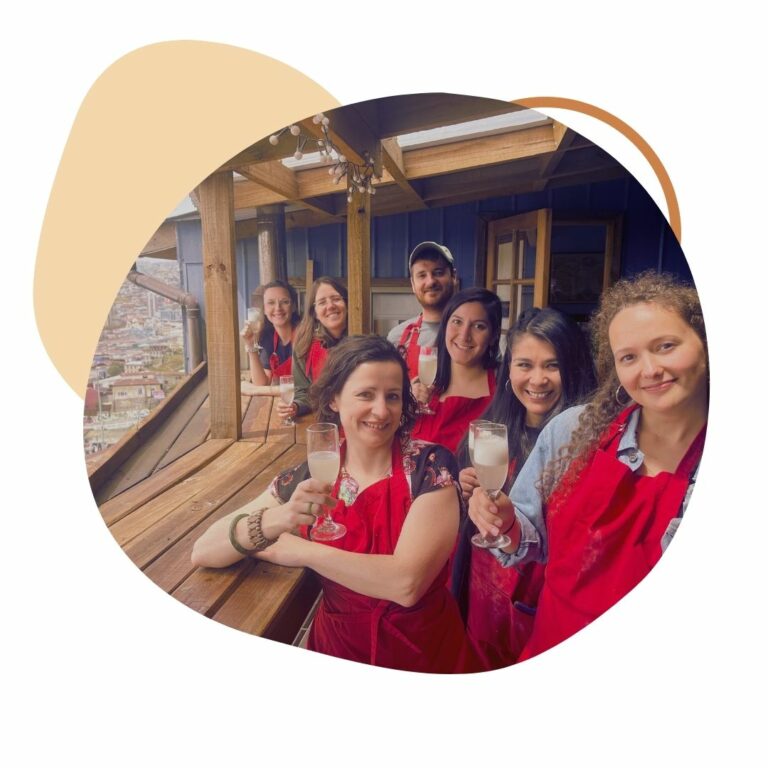
Florence
Founder of the agency and co-author of this travel guide. She has been crisscrossing the country intensively since 2016 and has been sharing her favorites and good advice with travelers since the opening of the agency in 2018.


We are traveling to Chile from Ottawa Canada on Feb. 26, 2025 and returning on March 22, 2025.
We are seasoned travellers dating back to $5 Canadian per day through India in the 1980s and 1990s.
Over the past 20 years we have walked 5 El Casinos in both Spain and Portugal. Extensive travel to Europe, including hiking the Dolomites, Africa, and Ecuador, including the Amazon and Galapagos. Most of our adventures have been frugal, back backing, with emphasis on local travel and culture. Most recently, last March, we did a high end bespoke Safari through Kenya, Tanzania and South Africa.
We are now interested in exploring Chile. We envision this adventure to be neither too rough or to “hote”.
We will fly into Santiago, where a friend of ours will host us for a few days, then we will be on our own to explore this vast sliver of land. We are interested in Easter Island, the wine district, the Lake District and Patagonia and perhaps Tierra del Fuego.
Can you be of any assistance in our upcoming adventure?
Regards, Karen Brousseau (labyrinthlady5665@gmail) and David Brown (brodavren@gmail.com